

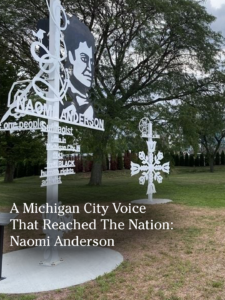
 A Michigan City Voice That Reached the Nation: Naomi Anderson
Long before national movements for civil rights and women’s suffrage gained widespread attention, a voice from Michigan City was already part of those conversations.
Naomi Bowman Talbert Anderson was born on March 1, 1843, in Michigan City to free Black parents, Elijah and Guilley Ann Bowman. Her early life reflected the reality of the time, where access to education and opportunity was limited, especially for Black children.
As a young girl, Anderson was not allowed to attend the local public school. However, after reading her poetry and recognizing her ability, school officials granted Anderson admission, and she received what would become her only formal education.
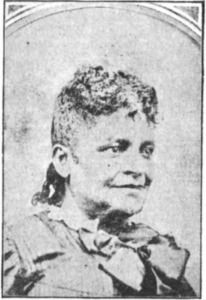
Naomi Anderson, year unknown.
Anderson developed a strong voice through both writing and speaking. At a time when many people in her position were denied a platform, she found ways to be heard. Her words would eventually reach audiences well beyond Michigan City.
By age 26, Anderson was stepping onto larger stages. She spoke at the first Women’s Rights Convention in Chicago, placing her among early advocates for expanded rights and representation. From there, her impact continued to grow.
Over the years, Anderson publicly addressed issues including women’s suffrage, labor rights, racial inequality, temperance, and support for orphans. None were widely accepted ideas at the time, but they were central to the changes many were beginning to demand.
As she traveled the country speaking to large audiences, Anderson’s writing also appeared in hundreds of newspapers. Her messages were reaching the masses, and she built a presence in conversations that were shaping the future of the United States.
What makes Anderson’s story stand out is not just what she did, but where she came from.
Michigan City in the 1800s was still growing, a developing community along Lake Michigan. From there, Anderson went on to become a national voice. Her story is a reminder that influence does not always start in large cities or well-known institutions. Sometimes, it begins in the humble places that form us.
Anderson’s path was not an easy one. Limited access to education and other barriers placed in front of her could have stopped her early on. Instead, she used what she had and continued forward, building a life around speaking, writing, and advocacy.
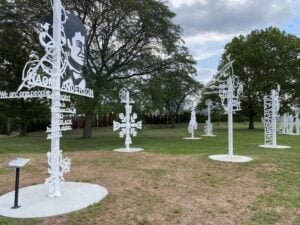
Naomi Anderson Art Installation, designed and built by Bernard Williams – located in Charles R. Westcott Park (via/ The Historical Marker Database)
Today, her connection to Michigan City remains an important part of local history.
The Michigan City Common Council has officially designated March 1 as “Celebrating Naomi Anderson Day,” to be observed each year. The recognition honors her contributions and ensures that her story continues to be part of the city’s identity.
Residents and visitors can also reflect on Anderson’s legacy at Charles R. Westcott Park in downtown Michigan City, where public art honors her life and impact. The park features a sculpture and interpretive elements that recognize Naomi Anderson as one of the city’s most influential historical voices — a woman whose words reached far beyond the shores of Lake Michigan. The space serves not only as a tribute to her contributions to civil rights and women’s suffrage, but also as a visible reminder that Michigan City helped shape a national story of progress and advocacy.
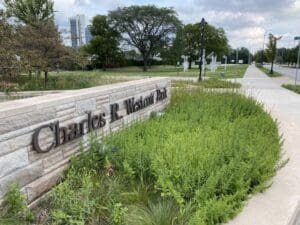
Sign for Charles R. Westcott Park (via/ The Historical Marker Database)
It also serves as a reminder of the kind of voices that have come from Michigan City. People who faced challenges, found their voice, and used it to speak on issues that mattered.
More than a century later, Naomi Anderson’s story still holds weight. The topics she spoke about are still part of conversations today. Access, fairness, and opportunity continue to shape communities across the country.
Her story is about being willing to speak up, even before you have an audience.