

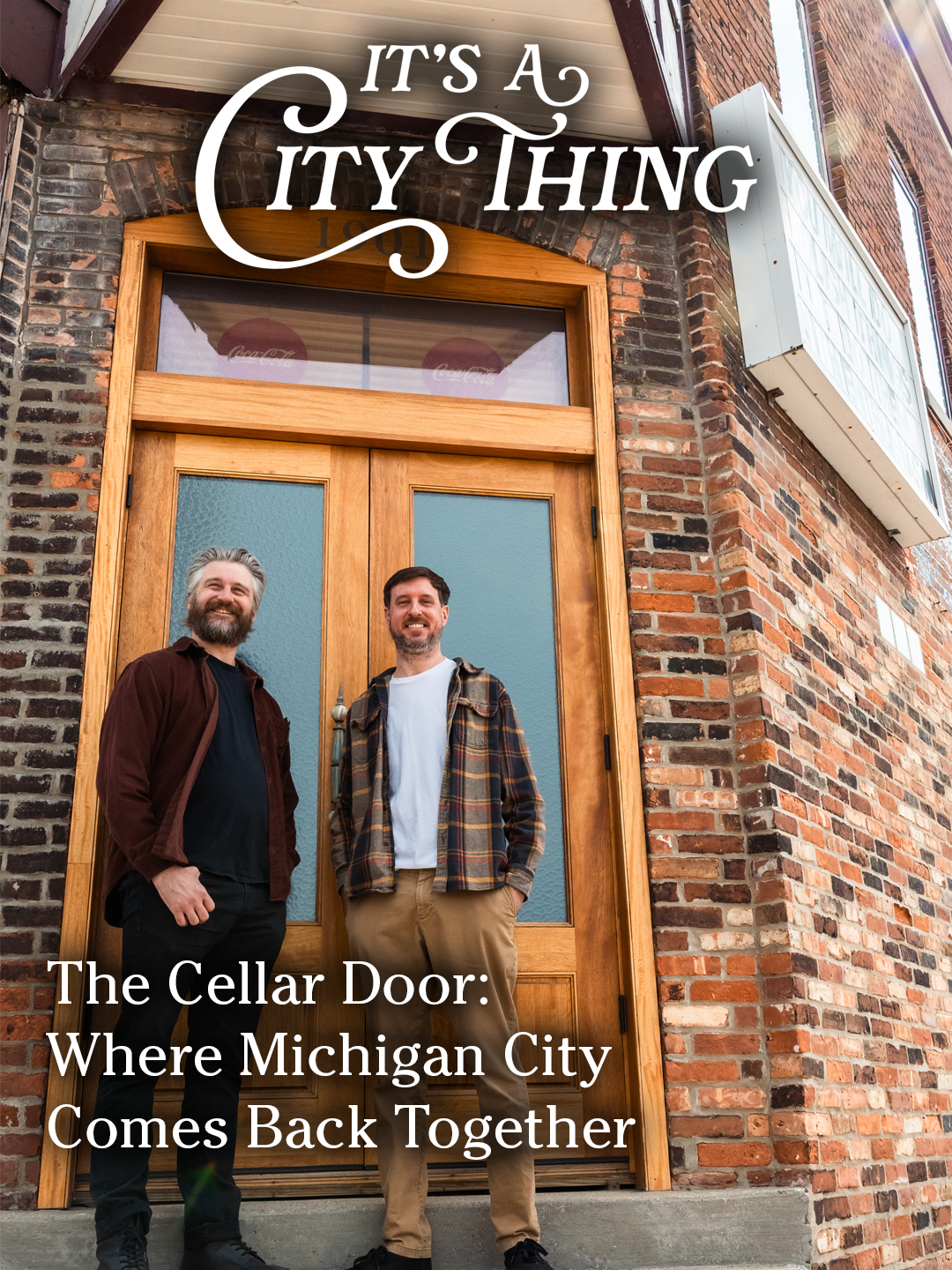
The Cellar Door: Where Michigan City Comes Back Together
For years, 1901 Franklin Street was the kind of place you didn’t forget, especially if your first time there involved a fake ID and a little bit of luck.
But after decades serving as the neighborhood staple, most recently known as “Harmony Bar” — the doors closed, the music stopped, and one of Michigan City’s most familiar corner bars slowly was forgotten.
That was until September 2025.
Today, the space has been brought back to life as The Cellar Door, a bar rooted in history, gathering, and a clear vision for what a modern neighborhood “third place” can be.
Third Place
a social environment separate from the two primary settings of home (“first place”) and work (“second place”). Coined by sociologist Ray Oldenburg, these spaces—such as cafes, libraries, parks, or pubs—act as community hubs that foster social connection, relaxation, and conversation.
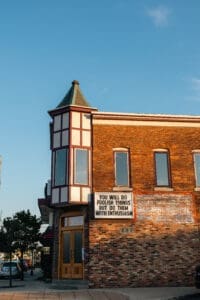
1901 Franklin St. “The Cellar Door” seen from across the street, facing south. May 2026
A Building Built For People
Originally built in 1891, the building has operated as a tavern in some form for well over a century— serving generations of Michigan City residents, even briefly pausing during Prohibition before continuing its run.
Rather than reinvent it entirely, owners Kyle “Hutch” Hutcheson and Spencer Herms leaned into that legacy.
Inside, the restoration is deliberate. A meticulously preserved Brunswick bar — purchased via mail catalogue, is estimated to be more than 100 years old, yet still anchors the room, carrying with it the wear and character of decades past.
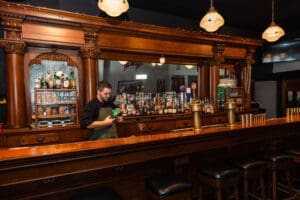
A bartender polishes glassware behind the building’s original bar.
“The catalog it came from had 12 different options — this one was “The Record Bar” so you’d mail in the order and it would get delivered by train, in pieces. Then they’d bring it in and put it back together.” said Hutcheson
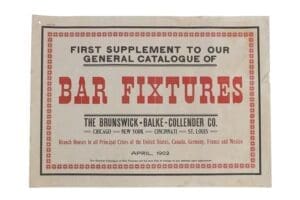
Brunswick Bar Fixture Catalogue
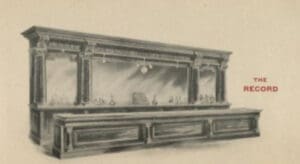
Illustration of “The Record” bar, believed to be the model installed at The Cellar Door
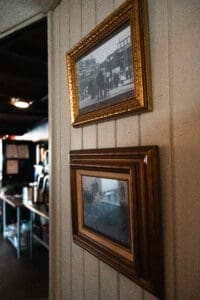
Brass fixtures, vintage details, and historic Michigan City photos line the space, creating an atmosphere that feels both intentional and timeless.
A Natural Sequence of Events
Hutcheson and Herms first met at outside a dormitory their freshman year at Indiana University, eventually forming a friendship rooted in shared interests — music, hospitality, and the kind of late nights that foster big ideas.
After Bloomington, their careers took them in different directions. Hutcheson built experience in the wine and spirits industry across Los Angeles and Chicago, while Herms worked in restaurants out west before returning to the Midwest.
Over time, both gathered the kind of perspective that only comes from seeing what works — and what doesn’t — in other places.
At the same time, they grew tired of working for other people.
So, when they came back to Michigan City, it wasn’t just to return home. It was to build something of their own — even if it took everything they had.
Anything But Perfect Harmony
Getting back to City was easy. Turning 1901 Franklin into The Cellar Door, was not.
The building had sat closed for nearly a decade, and it showed. Construction took over a year and a half to complete and at times, seemed like it would never be finished.
Herms said “Every time we tore into anything — five more projects appeared. The roof had 12 major leaks, there were mice in the floor, a collapsed sewer line, a failed main water line, — just a mess… oh, and carpet.”
“sooo much carpet.” — Hutcheson
Not Just a Wine Bar
Despite its name, The Cellar Door isn’t a traditional wine bar.
It’s a tavern — approachable, flexible, and built to welcome people as they are.
Yes, there’s an expansive wine program, with more than 100 selections. However, the emphasis is on accessibility — classic cocktails, affordable options, and a cold beer served in a 25-ounce frosted mug.
It’s a unique place in the fact that you can enjoy high-end wine and crafted dishes — or chicken-strips and $3 beer. Both feel right.
More About Being A Third Place
From layout to staff, The Cellar Door demands you be its friend.
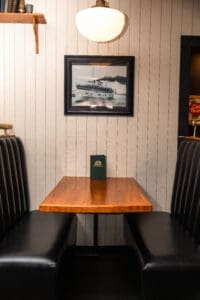
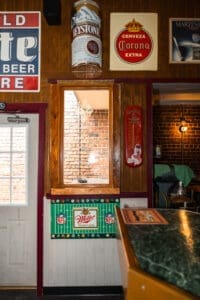
The main room is a tad more traditional, with large booths, high-tops, and the long bar making it easy to unwind and converse. The back room is relaxed, with high-ceilings and large windows overlooking vintage games like pinball & 10-pin bowling. Harmony-era beer signs fill the walls. An elevated street-side patio is shaded by umbrellas.
Regardless of which space you choose, a staff member is likely to find you and strike up conversation — if not about you, then them. And should they miss you, one of the owners will appear to ensure you’re enjoying yourself — or at least aware of the pin-ball machines.

“Everyone’s welcome.” says Hutcheson. “We’ve seen that our main clientele are people in the [service] industry that get off work and come here for a nightcap. But it’s a lot of cool artists too, people from the neighborhood. We’ll see how the demographic changes during the summer.”
Both owners emphasized that the bar is not “just for out-of-towners,” and that locals are always welcome.
“We’re not a stuffy place. Actually, if people to come in unplanned, without their friends, and leave having met someone new or heard a good story, that’s like our whole goal.” said Hutcheson.
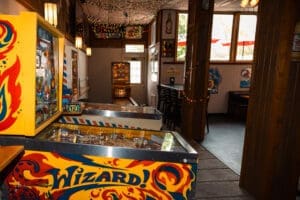
That sense of openness is by design, Herms says, “Hospitality is extremely important to us. I mean, the definition of the word, being friendly, generous, familiar — we try to live that. And I think when you come here, you feel that from our people.”
Honoring the Past, By Building Something New
For some, stepping back into 1901 Franklin brings a wave of nostalgia.
The Cellar Door doesn’t try to replace those memories. Instead, it allows the opportunity to build on them.
Several months into operation, the corner property has already begun to reestablish itself as a gathering place in Michigan City. And with plans to expand this summer with patio DJs, themed events, and special features — The Cellar Door hopes to cement itself as the next chapter of the more than a century legacy of bringing people together.
CLICK HERE TO READ OTHER “IT’S A CITY THING” FEATURES OR REQUEST ONE FOR YOUR BUSINESS.