

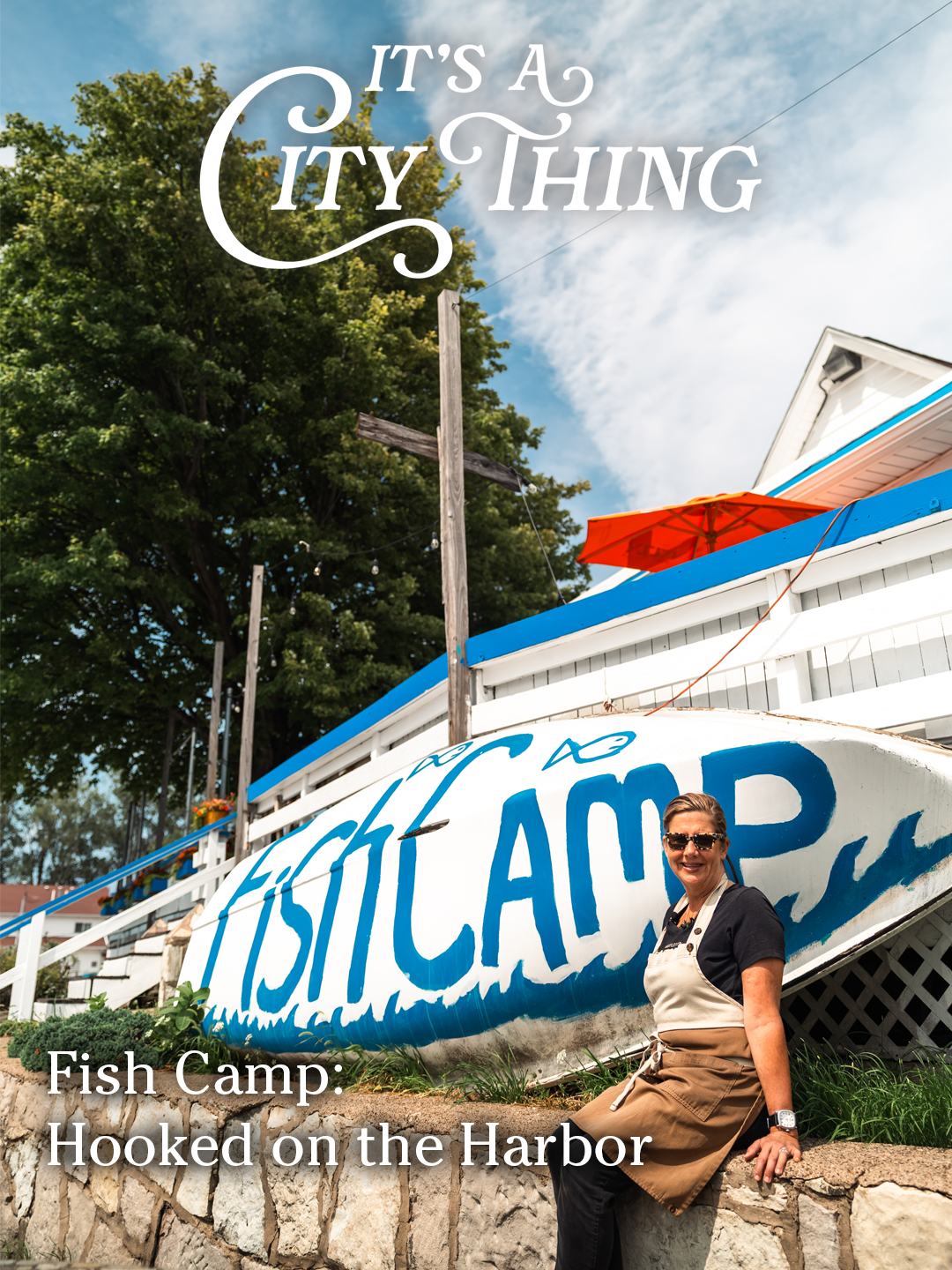
Fish Camp: Hooked on the Harbor
When Nicole Bissonnette opened Fish Camp, she wasn’t interested in creating a restaurant that fit neatly into one category.
Sitting along Trail Creek, just off Lake Michigan, Fish Camp Oyster Bar & Kitchen has become a natural stop for boaters, visitors and locals, whether they’re coming in off the water, meeting friends for dinner or grabbing a seat at the bar.
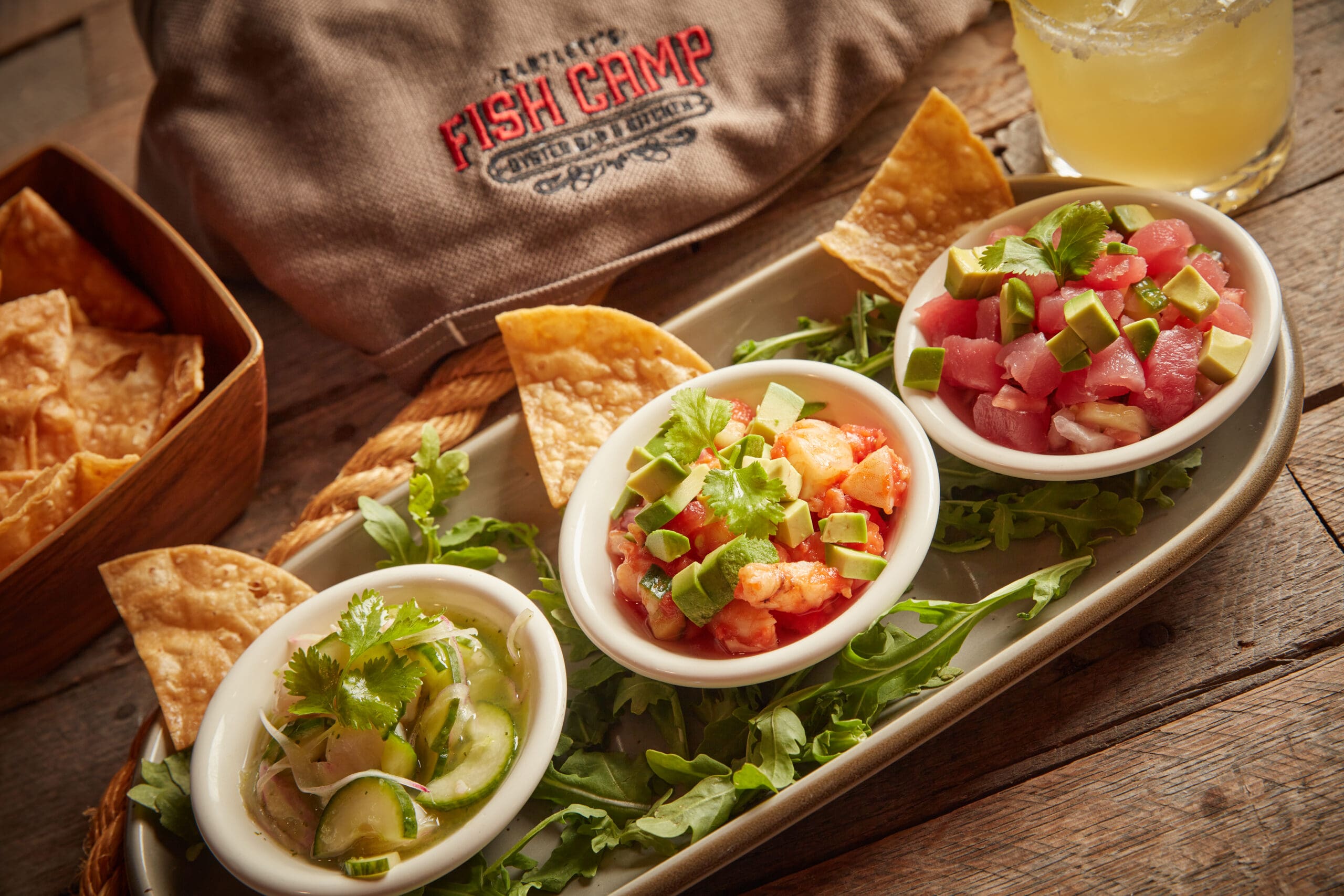
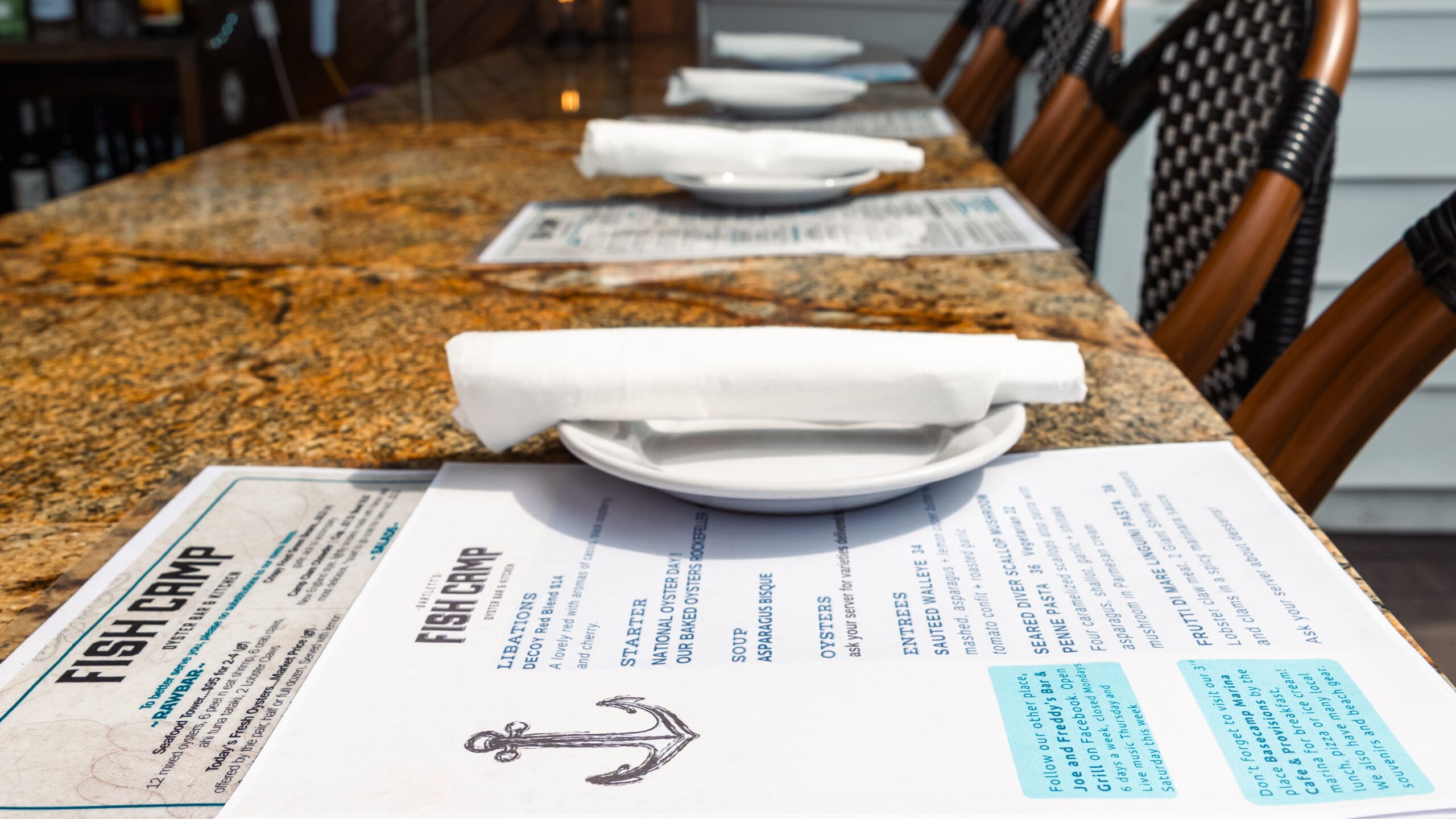
Fresh oysters and rotating seafood features share the menu with chicken schnitzel and fresh-brined jumbo wings, while the dining room can just as easily accommodate a business dinner as a group of friends grabbing beers after a day on the lake.
Bissonnette wanted Fish Camp to serve serious food without the formality that can sometimes come with it. And when she began researching a name for the restaurant, she found a history that matched that idea almost perfectly.
A Fish Camp of Her Own
Fish camps originated in the Carolinas, where fishermen and textile workers would bring their catch to communal pavilions, cooking over fires while their families gathered nearby. Over time, they became places to eat, share stories and spend time with others in the community.
What caught her attention wasn’t just the connection to seafood, but the kind of place those early fish camps had become. They were casual and communal, centered around good food without much ceremony, which was close to what she wanted to create in Michigan City.
As it turned out, the building she chose had already been serving as a gathering place in its own way for decades.
Fish Camp occupies the historic Michigan City Yacht Club along Trail Creek. The Yacht Club was chartered in the building during the 1930s. The building dates back long before then, when the property is said to have been home to a pioneer family. The Michigan City Yacht Club later expanded the building over the years as the club grew.
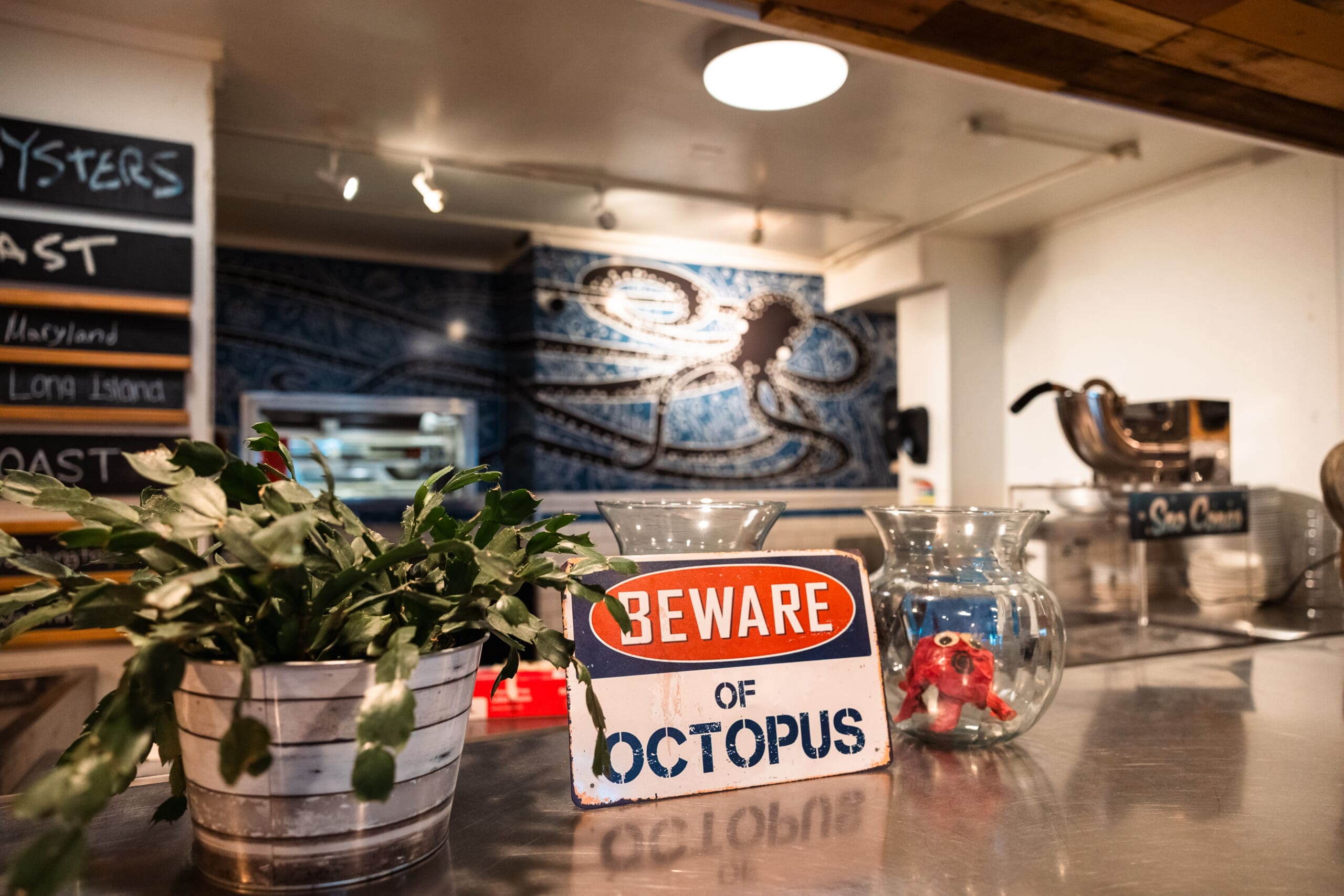
Those additions created much of what guests experience today, including the outdoor spaces and deck overlooking the harbor. Bissonnette has continued improving those areas, including the sunken outdoor bar, while keeping many of the naturally nautical details that connect the building to its past.
Fish Camp opened in July 2018—although technically, its first customers were served before the restaurant itself was ready. With permits still pending, Bissonnette parked her food truck out front and held a Fourth of July pop-up.
It was a fittingly informal beginning for a restaurant built around taking the pretension out of dining on the water.
Paris to Michigan City
Bissonnette’s interest in seafood started thousands of miles from Lake Michigan.
After college, she took a job with a French bank in Chicago but quickly realized a nine-to-five career wasn’t what she wanted. Then her Lincoln Park apartment was robbed of nearly everything she owned, and three weeks later, she moved to Paris.
Cooking had always interested her, particularly cooking for friends, so she enrolled in culinary school and worked as an interpreter at Le Cordon Bleu to help pay for her education. While there, she interned at a French-Japanese restaurant, where she learned to properly cut fish for sushi and worked with dishes ranging from nigiri sushi foie gras to wasabi crusted duck breast.
By the time she returned to the United States, seafood had become a much bigger part of how she thought about cooking.
At Bistro 157, her first restaurant in Valparaiso, Bissonnette began introducing diners to fresh seafood that wasn’t widely available in the area at the time. Deliveries came throughout the week, allowing the menu to change depending on what was fresh and available.
She later brought that approach to Bartlett’s Gourmet Grill in Beverly Shores, where oysters and seafood developed a following of their own. Her restaurant portfolio in the area would continue to grow, including Joe & Freddy’s nearby in the Town of Pines.
Among those who took notice of what she was doing with seafood were members of the Michigan City Yacht Club, who eventually approached Bissonnette about collaborating on a restaurant in their harborfront building.
It was an opportunity that brought her back to something she had been developing since Paris: a restaurant centered around fresh seafood, this time in a building with its own longstanding connection to the water.
Simple Food, Done Well
For all of Bissonnette’s culinary training, she isn’t particularly interested in making food complicated for the sake of it.
Her philosophy is closer to the opposite: simple food, good technique and people who care about what they’re serving — her menu reflects that.
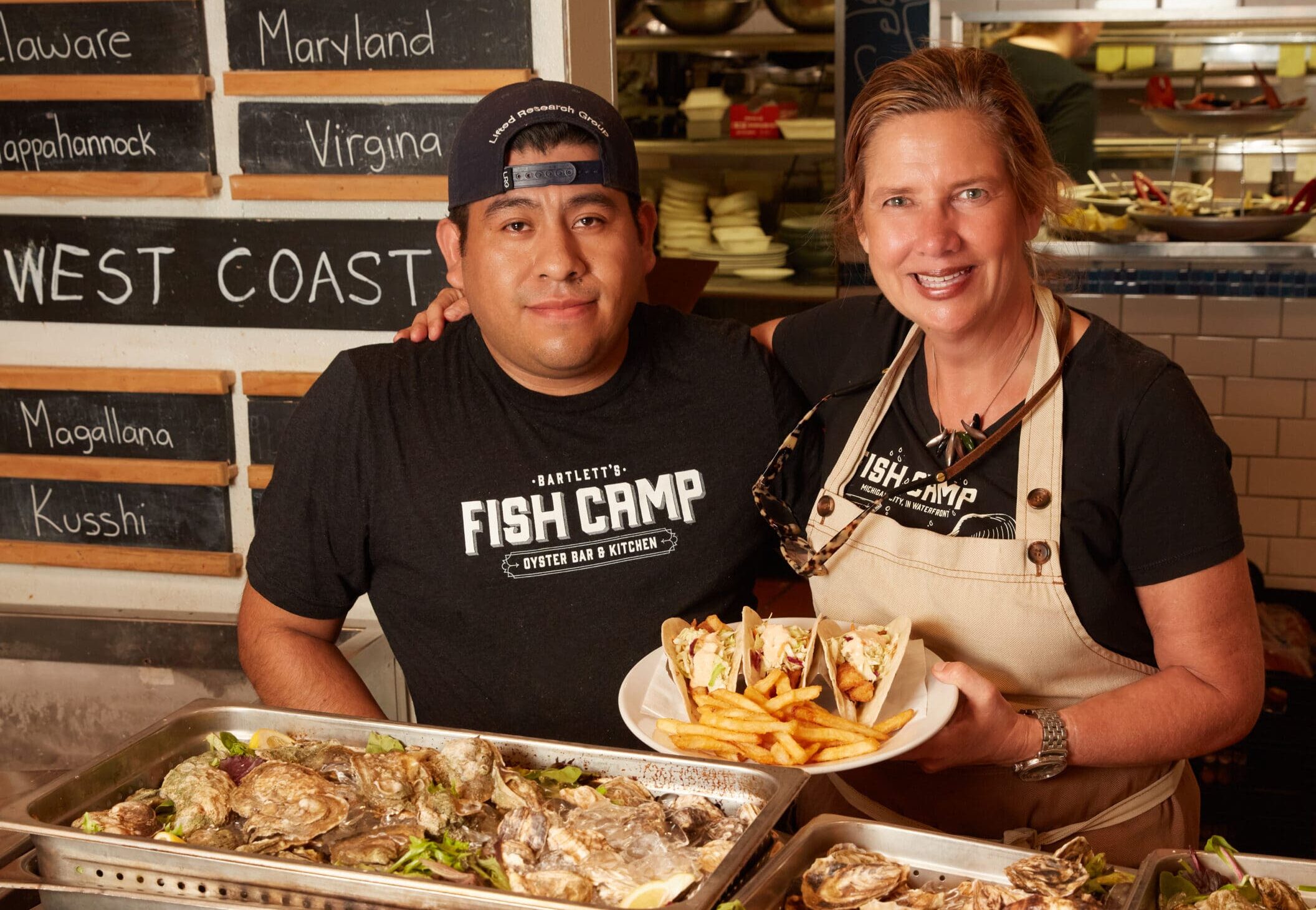
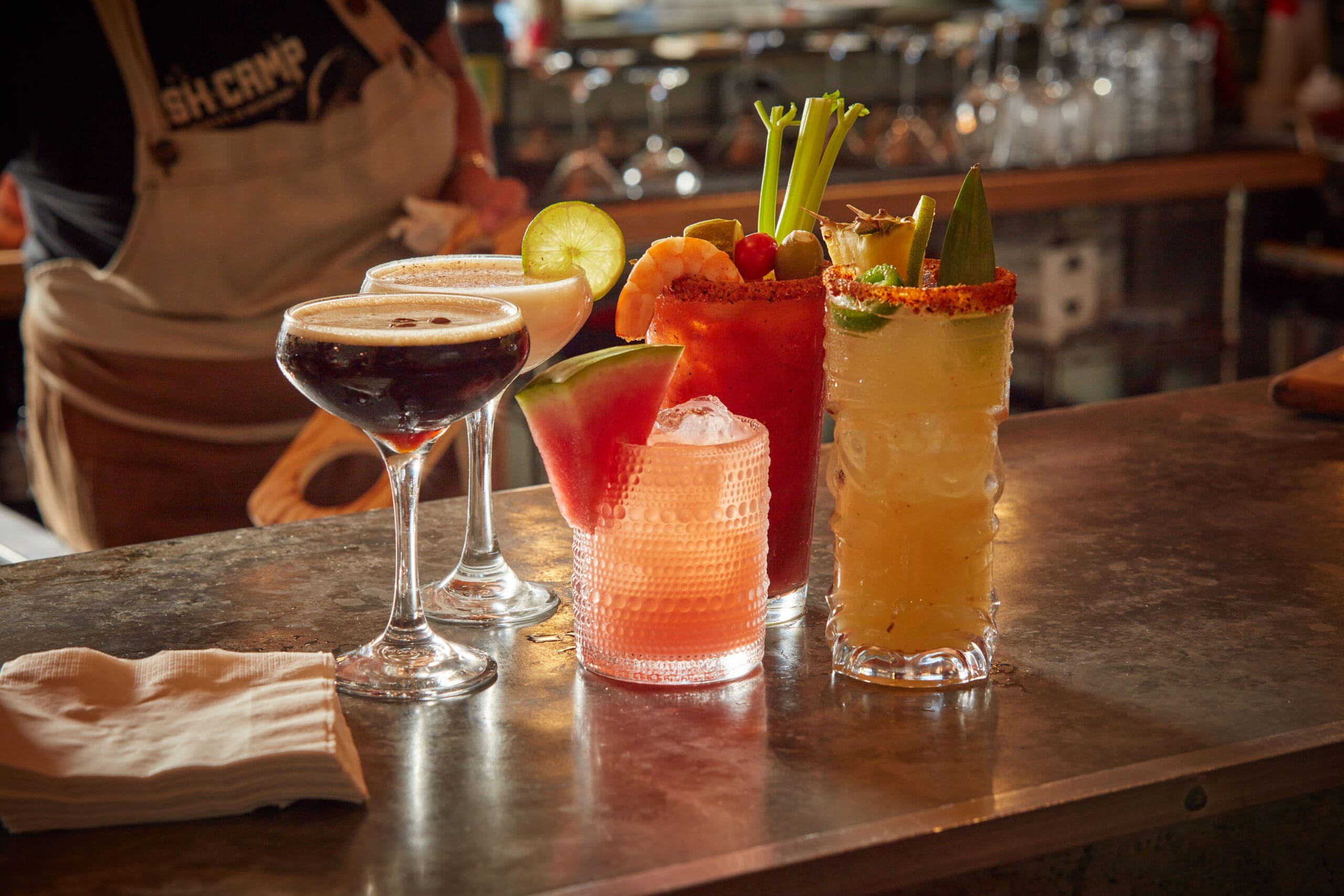
Seafood remains the focus, but Bissonnette has deliberately kept enough range that a table doesn’t have to agree on loving oysters before deciding to eat at Fish Camp. The chicken schnitzel has become a favorite. The wings are brined fresh. Craft cocktails, mocktails and local draft beers make for a variety of bar options.
There is room to try something new without straying away from the favorites you grew up on.
That sense of approachability extends beyond the menu. General Manager Anjie has been with Fish Camp since 2019 and has gotten to know enough regulars that, as Bissonnette puts it, “she hugs and kisses half the customers who walk through the door—if not on the way in, then on the way out.”
She’s part of a veteran crew that Bissonnette credits with making Fish Camp what it is today. Her son Jack works alongside her as a manager and lead server, while Bar Manager Kim has become another familiar face behind the restaurant. Together with longtime members of the kitchen, bar and service teams, they’ve helped create the familiarity that keeps regulars coming back.
Bissonnette considers the staff one of the biggest reasons Fish Camp works, in part because jobs aren’t treated as rigid territories. A server might be polishing glasses beside the dishwasher, while a cook might carry food into the dining room. When something needs to be done, whoever is available steps in—including the woman who signs the checks.
The expectation is that everyone takes some responsibility for the guest’s experience, regardless of what their job description says. It’s something Bissonnette talks about with her crew every day as they plan for shifts, recap what worked and what didn’t, and look for small ways to make the restaurant run better.
Back to Base Camp
Not long after opening Fish Camp, Bissonnette turned her attention to a small building across the parking lot that had previously housed a hot dog stand.
With boaters and visitors already moving through the harbor each day, she imagined a casual spot where they could grab what they needed before heading back out. She named it Base Camp, borrowing from the idea of a place to stop, stock up and return to throughout an adventure.
In the beginning, that meant boat sundries and snacks. Over time, Base Camp grew to include breakfast, lunch, fresh-made pizza, ice cream, souvenirs and logo wear.
Shirley St. Arnaud has managed Base Camp since day one and brought her own familiarity with the waterfront to the job after spending years working summers on the Port Authority docks.
Together, Fish Camp and Base Camp have given Bissonnette two very different ways to serve the same harbor.
Hooked on the Harbor
The view changes with the season, but Bissonnette’s idea for Fish Camp hasn’t changed much since 2018. She wants people to feel just as comfortable stopping in on a weeknight as they would celebrating an anniversary or planning a nice dinner out.
That might mean meeting a client for lunch, bringing a first date for dinner, catching up with an old friend or sitting at the bar alone. Bissonnette sees people come in with a laptop, phone or newspaper and stay awhile. Over time, the bartenders have gotten to know the regulars and what they like.
The restaurant changes with the season, too. Summer brings crowds of boaters off the water and more activity outside, while winter slows things down and turns Fish Camp into a secluded get-away with a cozy cabin feel until January, when they close for deep cleaning. Bissonnette likes both seasons.
For her, the measure of what she’s built isn’t whether people save Fish Camp for a special occasion. It’s whether they feel comfortable coming in when there isn’t one.
Disclaimer: Businesses featured through the “It’s A City Thing” initiative are featured at the discretion of the City of Michigan City for storytelling, tourism, and community engagement purposes. Inclusion does not constitute an endorsement, recommendation, or guarantee by the City of Michigan City, its officials, employees, or affiliates. No business paid, compensated, or otherwise provided consideration in exchange for participation or inclusion in this feature.